
6 Best Property Management Software For Small Landlords In 2026

by Dulan Perera
Director of Growth
Updated 26 March 2026

Table of contents
Key Takeaways Why do small landlords need property management software? What are the key features to look for in property management software? How do you manage apartment buildings and multifamily properties? What should you look for in build-to-rent property management software? How do you choose the right property management software? 6 best property management software for small landlords Smart tips for maximizing property management software How can you get the most from your property management software?Key Takeaways
- Small landlords using property management software see up to 23% reduction in payment delinquencies and 75% less admin time.
- Must-have features for 2026: online rent collection, maintenance tracking, financial reporting, and accounting integration.
- AI-powered automation (tenant screening, document processing, income verification) is now a key differentiator, not a luxury feature.
- Free options exist (Avail for 10 units, TenantCloud for 75 units), but growing portfolios benefit from scalable platforms with deeper accounting integration.
- The right choice depends on portfolio size, property type (residential vs. commercial), and specific pain points.
Why do small landlords need property management software?
Managing properties without dedicated software leads to late payments, disorganized records, and lost maintenance requests. These issues directly impact your bottom line and consume valuable time. Small landlords who implement property management software typically see a 23% reduction in payment delinquencies and cut administrative time by up to 75%.
In 2026, property management software has evolved beyond basic rent collection and maintenance tracking. AI-powered automation is now a key differentiator, with leading platforms offering automated tenant screening, AI-driven document processing, and predictive maintenance insights. For small landlords, this means less time on repetitive tasks and more confidence that nothing falls through the cracks.
For even just 5 properties, this can mean thousands in additional annual revenue and 15+ hours saved monthly. Landlord management software creates a professional system that scales as your portfolio grows.
Signs you need property management software:
- You spend more than 5 hours weekly on administrative tasks
- Tenants regularly pay rent late
- You struggle to track maintenance requests
- Tax season creates overwhelming paperwork
- You manage properties remotely
What are the key features to look for in property management software?
The most important features in property management software for small landlords are online rent collection, maintenance tracking, financial reporting, and accounting integration. These four capabilities address the highest-friction tasks that drive landlords to adopt software in the first place.
Effective rental property management programs combine essential tools in one integrated platform. Before selecting software for landlords, understand which features deliver the most value for your specific situation.
| Must-Have Features | Nice-to-Have Features |
|---|---|
| Online rent collection | Tenant screening |
| Maintenance tracking | Lease creation/e-signing |
| Financial reporting | Vacancy marketing |
| Tenant communication | Owner portals |
| Document storage | Vendor management |
| Invoicing and billing | Integration with accounting systems |
Online rent collection
Digital rent collection eliminates paper checks while providing tenants with convenient payment options. Most rent management software supports bank transfers, credit cards, and sometimes cash payments through retail partners.
The system automatically calculates late fees according to your lease terms and sends payment reminders. All transactions sync with your accounting, creating complete financial records without manual data entry.
Tenant screening tools
Tenant management software streamlines the screening process by collecting applications and running background checks automatically. These tools verify income, credit history, criminal background, and eviction records in minutes rather than days.
Digital screening ensures fair housing compliance by applying consistent criteria to all applicants. Most platforms allow you to customise screening criteria based on your risk tolerance and local regulations.
Lease management
Digital lease management transforms the entire leasing process from creation to renewal. Templates customized to your state's laws ensure legally compliant agreements while allowing property-specific clauses.
Automated renewal reminders notify you and tenants when leases are approaching expiration. The system stores all documents securely in the cloud, making them instantly accessible whenever needed.
Expense and accounting integration
Comprehensive landlord software tracks all property-related expenses and categorizes them for tax purposes. Receipt scanning features let you capture documentation directly from your smartphone.
Integration with accounting platforms like QuickBooks or Xero eliminates double-entry and reconciliation headaches. The software automatically calculates key metrics like cash flow and return on investment for each property.
Maintenance and communication
Effective property management software centralises maintenance requests in a single dashboard. Tenants submit issues through a mobile app or web portal, attaching photos and descriptions.
Communication tools create a documented history of all tenant interactions. Landlords property manager software lets you assign work to preferred contractors, track completion status, and store invoices for future reference.
Invoicing and billing features
Modern property management platforms include robust invoicing capabilities that streamline billing beyond basic rent collection. These systems generate professional invoices for additional charges like utilities, pet fees, parking, or maintenance costs.
The best invoicing solutions integrate directly with your accounting system, automatically applying payments and tracking outstanding balances. Automated billing cycles ensure consistent invoice generation, while customisable templates maintain your professional brand across all tenant communications.
Look for platforms that offer flexible billing options including recurring charges, one-time fees, and proration capabilities. Integration with multiple payment processors gives tenants choice while ensuring you receive funds quickly and securely.
| Feature | Re-Leased | Avail | Landlord Studio | Buildium | RentRedi | TenantCloud |
|---|---|---|---|---|---|---|
| Best For | Commercial/mixed-use | CDIY landlords (1-10 units) | Financial tracking | Growth-oriented | Tech-savvy landlords | Cost-conscious |
| Free Tier | No | Yes (10 units) | Limited | No | No | Yes (75 units) |
| AI Capabilities | Credia AI (Extract, Advise, Action) | None | None | Limited | None | None |
| Accounting Integration | Xero, QuickBooks, Sage Intacct, NetSuite (two-way) | Limited | QuickBooks, tax export | Built-in GL | Basic | QuickBooks |
| Rent Collection | Yes (Re-Leased Pay) | Yes | Yes | Yes | Yes (retail payments) | Yes |
| Maintenance Tracking | Full (Maintenance Hub) | Basic | Limited | Yes | Yes | Yes (vendor portal) |
| Mobile App | Property Manager, Tenant, Landlord | Yes | Yes (mobile-first) | Yes | Yes (mobile-optimized) | Yes |
| Commercial Lease Support | Native (commercial-first) | No | No | Limited | No | No |
| Tenant Portal | Yes | Yes | No | Yes | Yes | Yes |
How do you manage apartment buildings and multifamily properties?
Apartment managers face unique challenges that differ from single-family rental management. Managing multiple units within the same building requires specialized features for handling common area maintenance, utility allocations, and tenant communications at scale.
The most effective apartment management platforms offer unit-specific tracking while maintaining building-level oversight. Look for software that handles master billing for utilities, manages amenity reservations, and coordinates maintenance across multiple units efficiently.
Buildium and AppFolio excel in smaller apartment management scenarios, offering robust tenant portals and maintenance coordination tools. On the other handRe-Leased provides enterprise-level capabilities for both mid-size and larger apartment complexes. Avail and RentRedi work well for smaller apartment buildings with straightforward management needs.
What should you look for in build-to-rent property management software?
Build-to-rent developments require specialised management approaches that traditional landlord software may not fully address. These purpose-built rental communities demand sophisticated tenant lifecycle management, from initial lease-up through long-term retention strategies.
BTR operators need platforms that handle bulk lease processing, coordinate community amenities, and integrate with smart home technology. The software must support consistent branding across the community while managing individual tenant relationships effectively.
For build-to-rent portfolios, enterprise-grade solutions like Re-Leased offer the scalability and integration capabilities essential for managing large, professional rental communities. These platforms provide the operational framework needed to maintain consistent service delivery across hundreds of units.
Key BTR considerations include automated lease renewal processing, community management tools, and robust reporting for investor relations. The right platform transforms BTR operations from reactive management into proactive community stewardship.
How do you choose the right property management software?
| Your situation | Recommended Platform | Why |
|---|---|---|
| 1-5 residential units, budget-conscious | Avail or TenantCloud | Free tiers cover essential features |
| 5-10 residential units, growing | Buildium | Robust accounting and scalable features |
| Remote management priority | RentRedi | Mobile-optimized with video walkthroughs |
| Financial tracking focus | Landlord Studio | Receipt scanning, tax-ready reports |
| Commercial or mixed-use properties | Re-Leased | Commercial-first data model, two-way accounting integration |
| Large portfolio, enterprise accounting | Re-Leased + NetSuite/Sage Intacct | Enterprise accounting integration with specialist PMS |
6 best property management software for small landlords
We evaluated dozens of platforms based on features specifically valuable to small landlords, affordability, ease of use, and customer support quality.
1. Re-Leased
Re-Leased is a cloud-based commercial property management platform built natively around commercial lease data. In 2026, the platform's AI suite, Credia, includes three capabilities: Credia Extract for automated lease document ingestion, Credia Advise for natural-language Q&A over lease documents with source citations, and Credia Action for in-workflow AI recommendations. Two-way integrations with Xero, QuickBooks Online, Sage Intacct, and NetSuite keep property operations and accounting synchronized without duplicate entry.
- Commercial-first data model handles complex rent schedules, rent reviews, outgoings, and multi-entity structures.
- Credia AI reduces lease ingestion from weeks to hours and answers lease questions with cited sources.
- Two-way accounting integrations (not one-directional data dumps) with four major platforms.
- Full operational suite: maintenance hub, inspections, compliance, arrears management.
- Mobile apps for property managers, tenants, and landlords.
2. Avail
Avail offers a comprehensive solution designed specifically for DIY landlords with small portfolios. Its user-friendly interface makes it accessible even for tech-hesitant property owners.
The platform offers a free tier for landlords with up to 10 units, making it an excellent starting point. Avail excels at tenant screening with comprehensive background checks and automated reference verification.
- Full-featured mobile app
- Comprehensive tenant screening
- Basic accounting capabilities
3. Landlord Studio
Landlord Studio focuses primarily on residential property with powerful income and expense tracking tools. Its receipt scanning feature lets you capture and categorize expenses instantly from your smartphone.
The mobile-first design makes it ideal for landlords who manage properties while maintaining other careers. The platform's income tracking automatically reconciles with bank accounts to ensure complete financial accuracy.
- Receipt scanning
- Tax-ready reports
- Mobile-first design
- Limited maintenance features
4. Buildium
Buildium offers the most comprehensive feature set among small landlord property management software, making it ideal for those planning significant portfolio growth. Its robust accounting system includes general ledger, accounts payable, and bank reconciliation tools.
The platform handles everything from tenant screening to utility billing. The primary considerations are its higher price point and steeper learning curve compared to simpler solutions.
- Comprehensive accounting
- Owner portal for investors
- Detailed reporting
- Higher learning curve
5. RentRedi
RentRedi delivers a mobile-optimised experience for both landlords and tenants with particularly strong tenant-facing features. Its tenant app facilitates rent payments, maintenance requests, and lease document access.
The platform's customisable dashboard lets you configure the interface to match your management style. The software includes built-in video walkthrough capabilities for virtual showings and maintenance diagnostics.
- Strong mobile experience
- Video walkthrough tools
- Retail payment options
- Basic accounting features
6. TenantCloud
TenantCloud offers one of the most generous free tiers, supporting up to 75 units without charge. Its marketing tools automatically sync vacant properties with popular listing sites to reduce vacancy periods.
The platform includes a vendor portal that streamlines communication with maintenance contractors. The software's tenant screening includes unique rental history verification features.
- Generous free tier
- Listing site integration
- Vendor portal
- Interface inconsistencies
Smart tips for maximizing property management software
In 2026, AI in property management goes beyond basic automation. Look for platforms that offer AI-powered document processing (automatically extracting lease data from PDFs), natural-language Q&A over lease documents, and in-workflow AI recommendations for maintenance and billing decisions. Re-Leased's Credia suite is an example of property-specific AI that works because it is built on structured lease data, not bolted on as a generic chatbot.
1. Automate key actions and set important reminders
Configure your system to automate rent reviews, late fees plus messaging based on your lease terms and invoicing. Create escalating reminder sequences that start with friendly payment reminders before due dates and progress to formal late notices after grace periods expire.
This automation ensures consistent policy enforcement while removing the emotional element from late fee conversations. Many landlords report significant reductions in late payments and missed revenue after implementing automated reminder systems.
2. Sync with accounting systems
Connect your property software directly to your accounting system to eliminate manual transaction entry. This integration automatically reconciles payments with tenant ledgers and categorizes expenses for accurate financial reporting.
Daily two way synchronisation provides real-time visibility into your financial position.
3. Use mobile apps for on-the-go updates
Install your platform's mobile application on your smartphone to manage properties from anywhere. These apps typically provide push notifications for important events like new applications, maintenance requests, or lease expirations.
Mobile access enables immediate response to urgent situations even when you're away from your computer. Many online landlord software platforms allow photo documentation directly through the app, making property inspections more efficient.
4. Leverage AI
AI represents the greatest opportunity for cost savings in lease management. Identify repetitive tasks that can be automated, such as rent escalation calculations, payment processing, and renewal notifications.
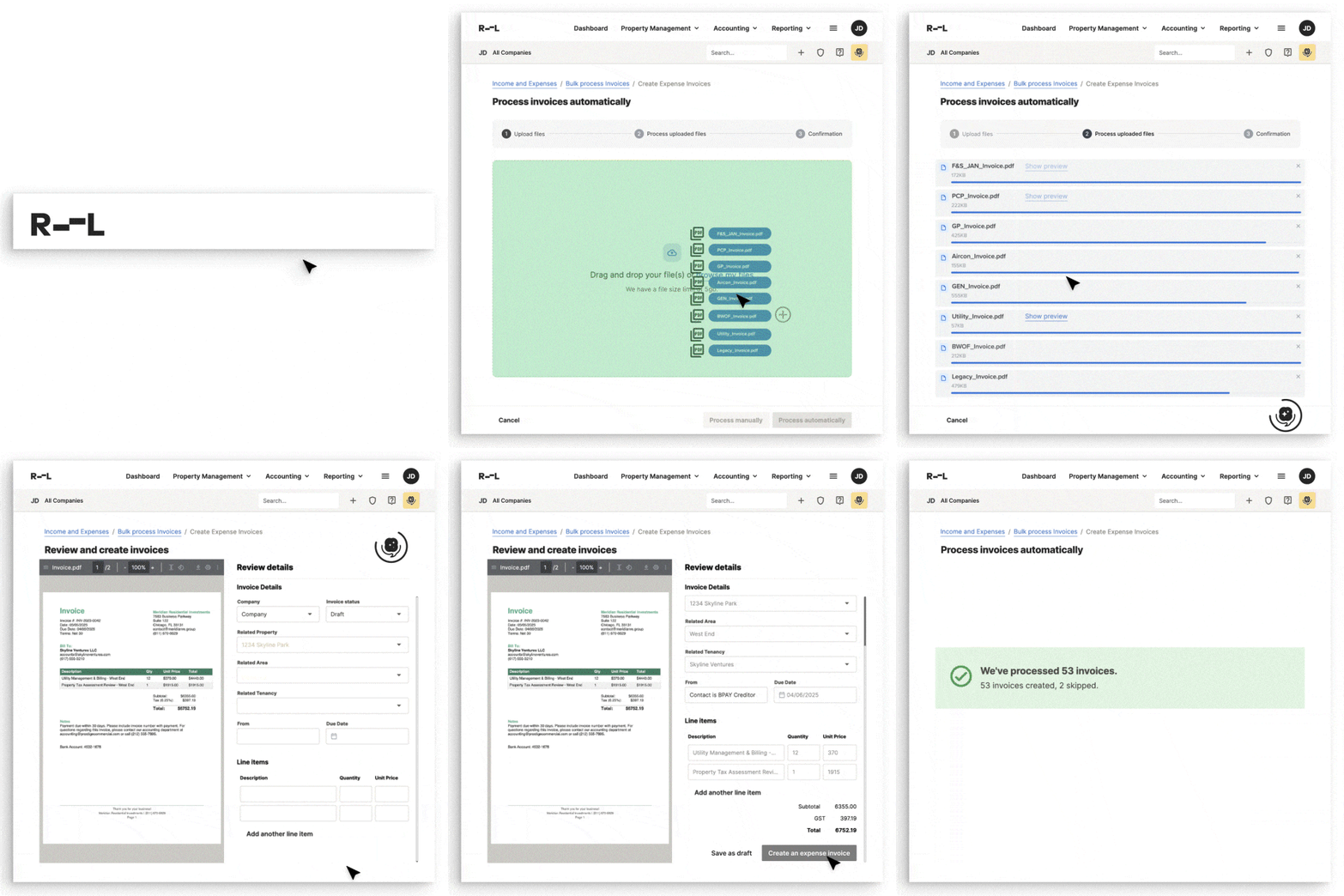
Document management automation is particularly valuable, with AI-powered tools like Credia AI , extracting key information from lease documents automatically. This technology can reduce data entry time by up to 90% while improving accuracy.
How can you get the most from your property management software?
The right property management software transforms rental ownership from a time-consuming burden into an efficiently managed investment. For small landlords, these platforms deliver enterprise-level capabilities at accessible price points.
Your specific needs should drive your selection process, focusing on the features that address your biggest pain points first. As your portfolio grows, consider how your platform will scale with you.
Commercial property owners with expanding portfolios might eventually benefit from more robust solutions like Re-Leased, which bridges the gap between residential and commercial management with AI-powered tools and comprehensive integration capabilities.
Whatever solution you choose, implementing rental property management software represents one of the highest-return investments you can make in your rental business. The right platform doesn't just save time—it fundamentally improves how you operate and grow your portfolio.
About the Author
 Dulan Perera
Director, Growth
Dulan combines strategic technology expertise with deep knowledge of commercial real estate (CRE) to drive meaningful growth across the industry. His focus is on connecting property professionals with insights that matter, spanning compliance, financial operations, property management, stakeholder relationships, and the evolving role of technology and AI. His goal: help real estate businesses scale smarter in a digital-first world.


